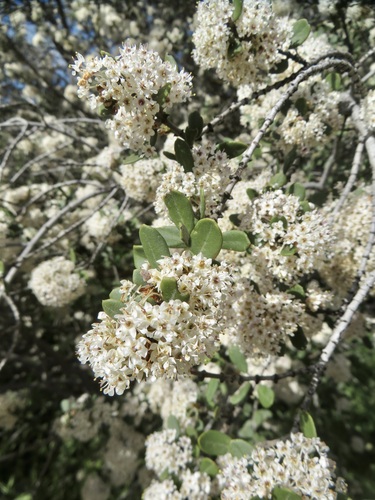
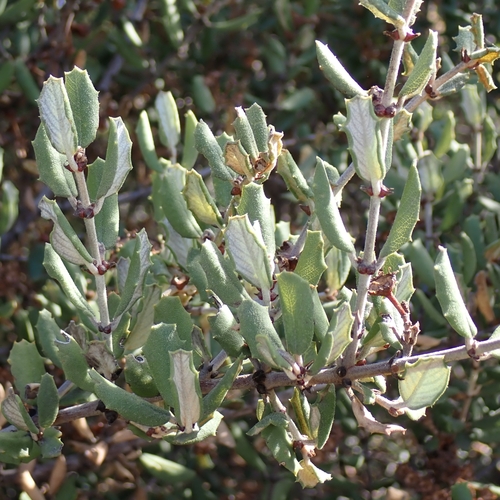
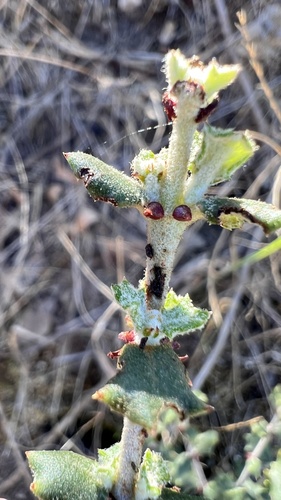
Hoary Leaved Ceanothus
Ceanothus crassifolius
Care
full sun, part shade
very low
Fast; Prefers granular, well drained soil such as decomposed granite.
5–14ft tall , 5–10ft wide
Jan-Dec
Evergreen
Resistant
Prized
Supports up to 120 butterfly and moth species in Mediterranean California
Chaparral in the San Gabriel and San Bernardino Mountains, 2500-5000 ft elevation.
Care Guide
Planting
Plant your Hoary Leaved Ceanothus in full sun with fast-draining soil - decomposed granite is ideal. Space it where it has room to spread, since this shrub can reach 5 to 14 feet tall and wide. Plant in fall or winter to take advantage of the rainy season for establishment. Avoid heavy clay or compacted soils; if your soil drains slowly, amend it heavily or plant on a slope for bank stabilization.
After Planting
Water twice monthly during your first summer, then cut back dramatically once established - mature plants need virtually no summer water. After the first year, let rainfall do the work; supplemental irrigation should max out at twice a month even during dry spells. The #1 mistake Bay Area gardeners make is overwatering: this chaparral native expects drought and will rot in soggy soil. Prune lightly after spring flowering (January through March) to shape it, but avoid heavy pruning.
Visit Calscape for more information about Hoary Leaved Ceanothus
Endangered & Threatened Species Supported
Oregon Callipelis Butterfly; California state threatened
Wildlife Supported
Insects
ceanothus is larval host plant for this California native butterfly
larval feeding period on foliage during active growth

larvae mine leaves during growing season