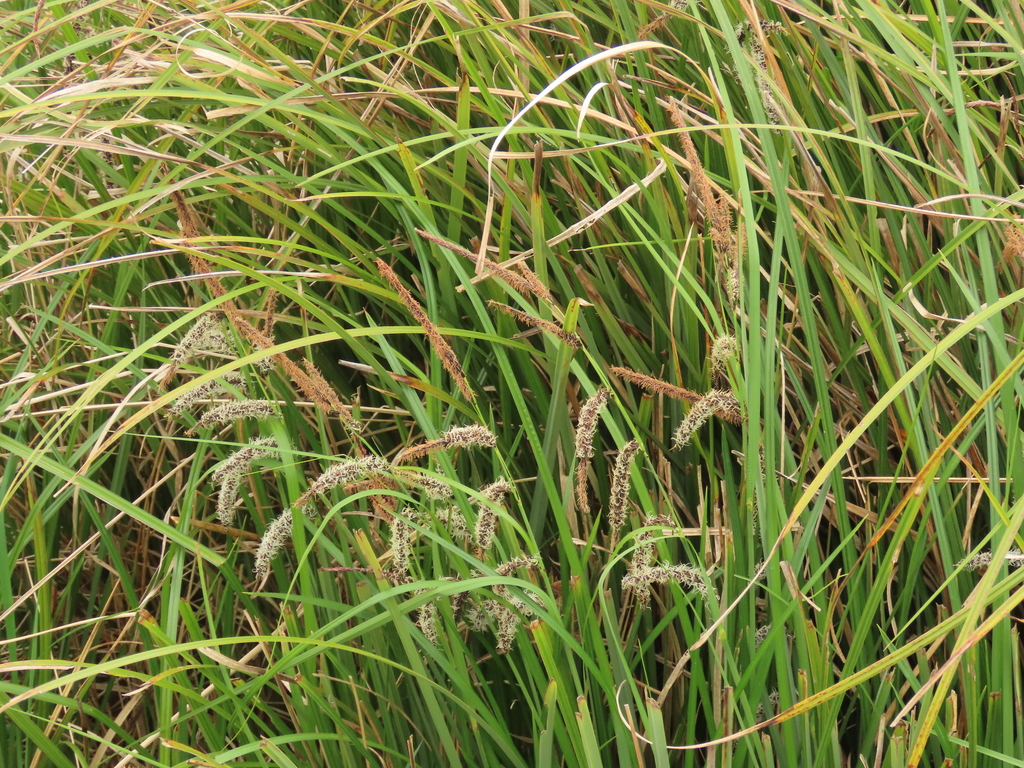
Slough sedge
Carex obnupta
Care
moderate
Fast, Medium, Slow; Tolerant of a variety of garden soils as long as sufficient moisture is available.
3–4ft tall
Mar-May
Resistant
Friendly
Coastal salt marshes and freshwater wetlands from Humboldt County to Monterey County, at sea level to 500 ft elevation, extending to Washington.
Care Guide
Planting
Plant slough sedge in deep shade where it will receive minimal direct sun. It thrives in moist to wet soil and tolerates a wide range of drainage conditions - from fast to slow - as long as the soil stays consistently moist; this makes it ideal for boggy spots, rain gardens, or near water features. Plant in spring (March through May) to establish before summer. Space plants 2-3 feet apart if creating a colony, as they spread via underground rhizomes.
After Planting
Water regularly during your first summer to keep soil consistently moist; once established in year two, slough sedge needs little supplemental watering in the Bay Area except during drought. This is a low-maintenance plant that requires minimal pruning - simply remove any dead or damaged stems in early spring. The biggest mistake Bay Area gardeners make is planting this sedge in dry soil or expecting it to thrive without adequate moisture; if your soil dries out between waterings, this isn't the right spot for it.
Endangered & Threatened Species Supported
California state threatened; recovering population
Wildlife Supported
Birds
Forages for insects above sedge beds during breeding season migration through California
Insects
Nymphs develop in sedge-lined sloughs; emergent sedges used as emergence substrate
Mammals
Uses sedge beds for denning and resting sites along sloughs and marsh edges
Reptiles
Uses dense sedge cover for concealment while hunting in wetland margins