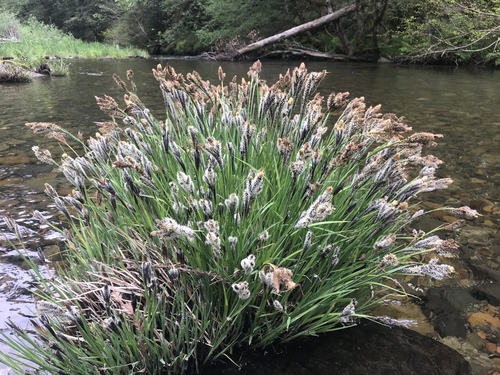
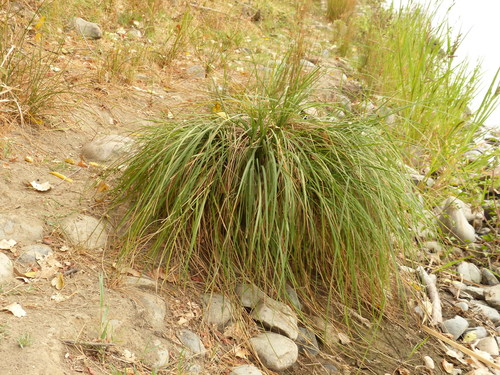
California black-flowering sedge
Carex nudata
Care
part shade
moderate
Fast, Medium, Slow; Tolerates rocky, gravelly, sandy or clay soils as long as plenty of water is available.
1–2ft tall , 2–2ft wide
Deciduous
Resistant
Friendly
Coastal marshes and wetlands from Humboldt County to Monterey County, at sea level to 500 ft elevation in riparian and estuarine habitats.
Care Guide
Planting
Plant your California black-flowering sedge in partial shade to deep shade, in a location where you can keep the soil consistently moist - it thrives in the damp zones near streams and marshes. This sedge is flexible about soil type and will grow in rocky, gravelly, sandy, or clay soils as long as water is available, so drainage isn't a concern as long as you're prepared to water regularly. Space plants 1 to 2 feet apart to give each mounding tussock room to develop its dense form.
After Planting
Water weekly during summer to keep the soil moist; this is the one non-negotiable requirement for success. Once established in year two, you can reduce watering frequency slightly but never let it dry out completely during warm months. This is a deciduous sedge, so expect it to die back in winter - leave the dead foliage in place until spring cleanup, as it protects the crown. The most common mistake is underwatering; remember this plant evolved in constantly moist streamside habitat, so err on the side of too wet rather than too dry.
Visit Calscape for more information about California black-flowering sedge
Endangered & Threatened Species Supported
Salt marsh habitat specialist; critical habitat designated
California Clapper Rail; federally and state endangered
Ornate shrew is a Species of Special Concern
Wildlife Supported
Birds

nesting and cover in marsh habitat where C. nudata occurs

April-June breeding season, uses sedges for nest structure
Mammals

uses dense sedge clumps for cover and nesting tunnels
Insects

associated with sedge root systems in marsh substrate