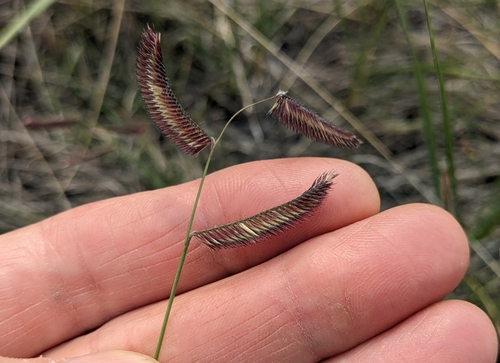
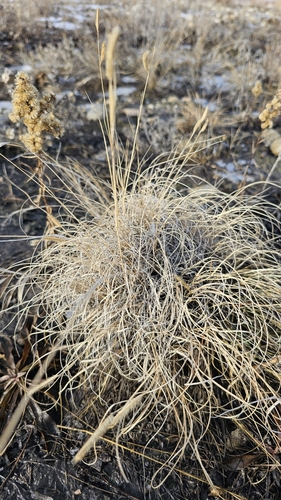
Blue grama
Bouteloua gracilis
Care
full sun, part shade
very low
Fast, Medium; Tolerates a variety of soils as long as adequate drainage is provided.
0–2ft tall , 2–2ft wide
Jun-Aug
Resistant
Friendly
Desert grasslands and scrub in northeastern California and the Modoc Plateau, 4000-6000 ft elevation, extending east to the Great Plains.
Care Guide
Planting
Plant blue grama in full sun in a location with fast or medium drainage - this is non-negotiable, as soggy soil will kill it. Space plants about 1 to 1.5 feet apart to match their natural root spread, and amend heavy clay soil with compost or sand if needed to improve drainage. Plant in spring or fall for best establishment. This grass tolerates a wide range of soil types as long as water drains quickly, so don't overthink soil fertility.
After Planting
Water twice monthly during the first summer to establish deep roots (it will eventually reach 3 to 6 feet down), then cut back to almost nothing once established - mature plants need water only during extreme drought. In winter when the plant goes dormant, you can cut it back if you like, but it's not necessary. The #1 mistake is overwatering: blue grama evolved on the Great Plains and despises wet feet, so err on the side of dry rather than moist.
Endangered & Threatened Species Supported
California listed as Threatened
California Species of Special Concern
Wildlife Supported
Insects

essential larval host plant for prairie populations

primary diet during nymphal and adult stages

significant grasshopper pest in shortgrass prairie

larval food plant for skipper butterfly development

primary larval host in shortgrass prairie

larval development in grassland habitat

caterpillar feeding on grass blades

drought-tolerant species feeding during dry periods
Birds

winter seed foraging in shortgrass prairie; spring/summer breeder

fall foraging for grass seeds; nests in shortgrass habitat

opportunistic seed foraging during migration and winter

supplemental food in shortgrass and prairie habitats
Mammals
seed predation and caching in autumn