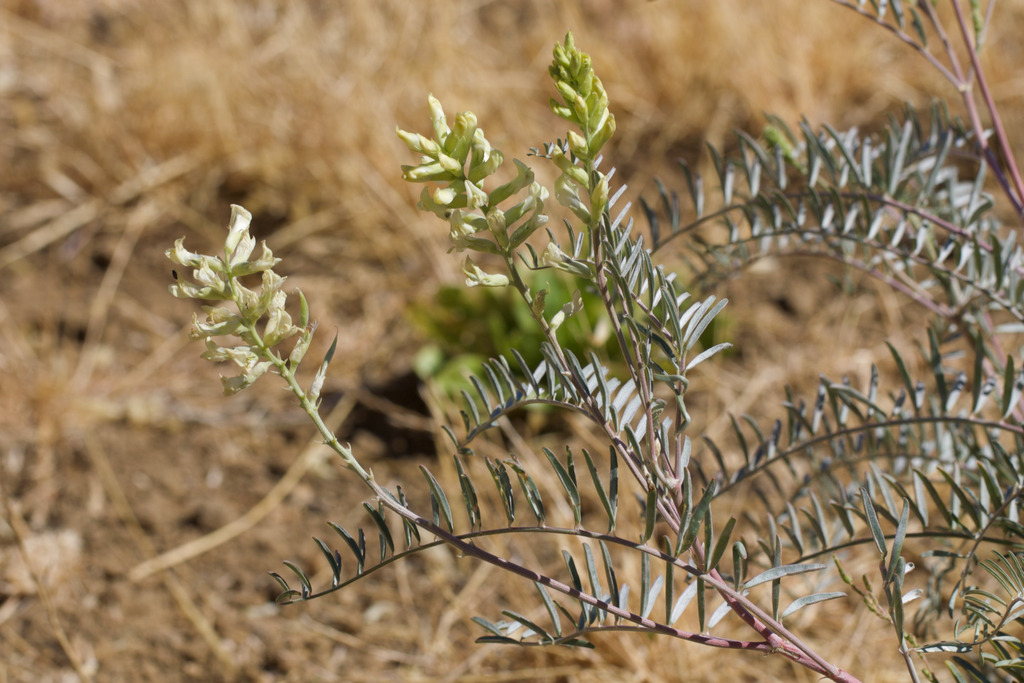
San Joaquin Milk Vetch
Astragalus asymmetricus
Care
full sun, part shade
2–4ft tall
Friendly
San Joaquin Valley and adjacent foothills in Kern and Tulare Counties, 500-2000 ft elevation in alkaline grassland.
Care Guide
Planting
Plant San Joaquin Milk Vetch in full sun with well-draining soil - this Central Valley native thrives in the same conditions it evolved for. Space plants to accommodate their mature height of 2 to 4 feet and sturdy, hairy stems that grow erect and substantial.
After Planting
Water regularly during the first growing season to establish a strong root system, then transition to drought tolerance typical of native perennials. Expect cream-colored flowers in spring followed by distinctive hairy seed pods that hang in bunches; you can leave these on the plant for wildlife interest or remove them once dried if you prefer a tidier appearance.
Visit Calscape for more information about San Joaquin Milk Vetch
Endangered & Threatened Species Supported
Giant kangaroo rat, critically imperiled
Wildlife Supported
Mammals
Harvests seeds for hoarding; important winter food cache in native habitat
Opportunistic forage in San Joaquin Valley scrublands, especially spring growth
Harvests mature seeds for cache storage; peak foraging Jul-Aug
Insects
Parasitizes seed-feeding insects associated with milk vetch seeds
Early season foraging during queen establishment and colony growth