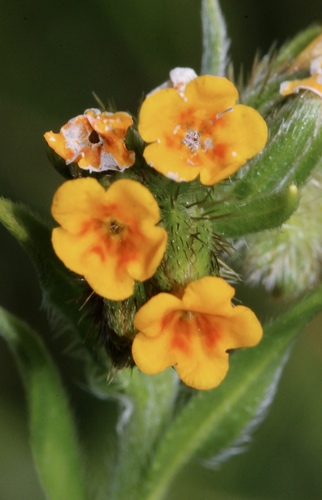
Bugloss-flowered fiddleneck
Amsinckia lycopsoides
Care
Prefers loamy soils.
0–3ft tall
Mar-May
Resistant
Friendly
Coastal scrub and chaparral from San Francisco County to San Luis Obispo County, below 2000 ft elevation on rocky slopes.
Care Guide
Planting
Plant bugloss-flowered fiddleneck in spring during its blooming season (March through May) in loamy, well-draining soil. This California native is tough and adaptable, thriving in foothill and sagebrush conditions, so it's forgiving about exact placement - just avoid heavy clay. Space plants according to their mature size of 1 to 3 feet tall, depending on growing conditions.
After Planting
This is an annual herb, so it won't overwinter in your garden - treat it as a seasonal plant that completes its life cycle in a single season. Since it evolved in dry foothill and sagebrush areas, avoid the temptation to baby it with frequent watering once established; your biggest mistake will be overwatering. Enjoy the yellow spring flowers and the native butterflies and moths they attract, then let it reseed naturally if you want it to return next year, or pull it out and start fresh.
Visit Calscape for more information about Bugloss-flowered fiddleneck
Wildlife Supported
Insects

Early spring through early summer larval host plant

Multiple generations utilize plant as larval host plant April-October

Sap-feeding herbivore; indirect support of predatory insects

Larval leaf miners; provides protein resource for insectivorous wildlife

Polyphagous larval host; opportunistic use during population peaks