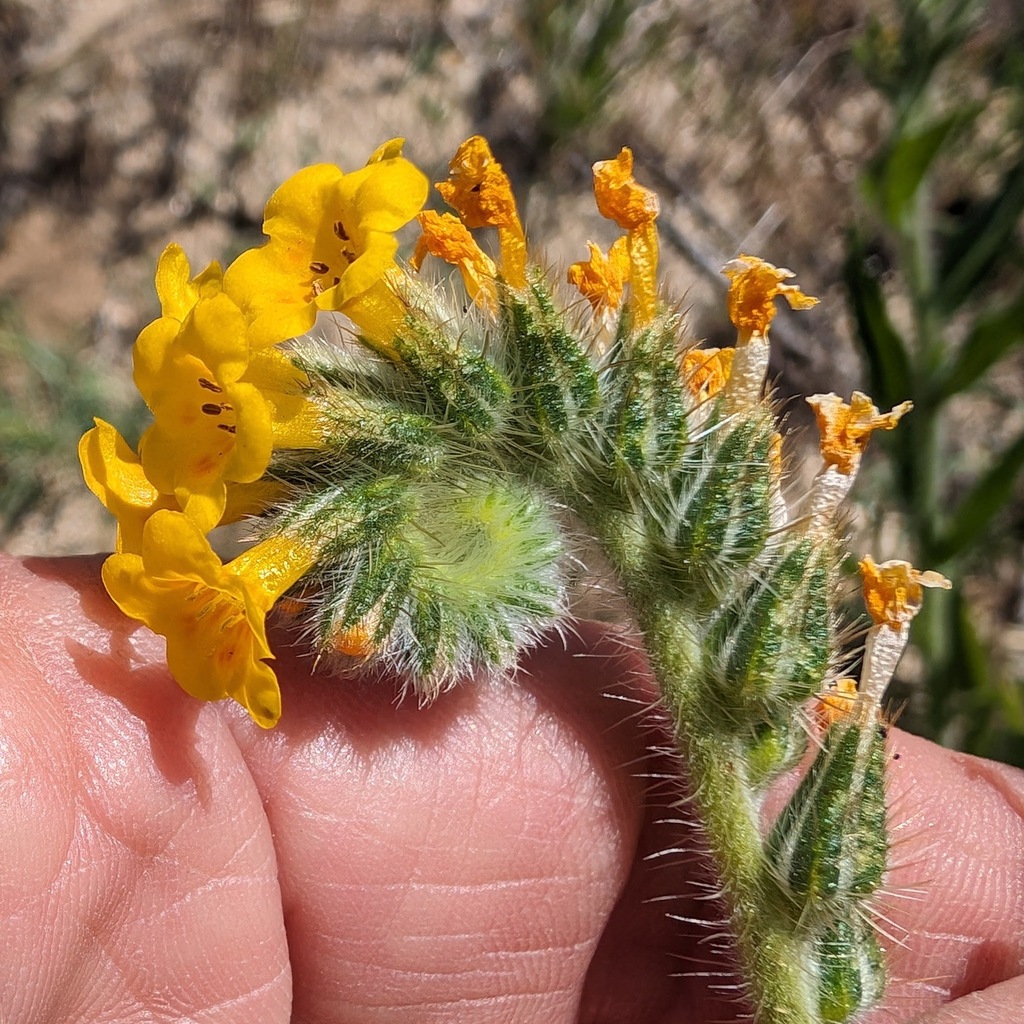
Menzies' fiddleneck
Amsinckia intermedia
Care
full sun
low
0–3ft tall
Jan-Dec
Friendly
Coastal scrub and grasslands from Humboldt County to San Diego County, below 2000 ft elevation in open disturbed areas.
Care Guide
Planting
Plant Menzies' fiddleneck in full sun - it needs all the light you can give it. While soil requirements aren't specified in the available data, this native wildflower is adapted to western North America's diverse conditions, so ensure your planting spot has good drainage. Winter through spring is the blooming season, so plan your planting accordingly if you want flowers during those months.
After Planting
Water moderately during establishment, then transition to low water once the plant is settled - this is a drought-tolerant native that doesn't need constant moisture. The biggest mistake Bay Area gardeners make is overwatering; fiddleneck prefers drier conditions, so err on the side of less rather than more. Specific information on pruning, fertilizing, and year-one establishment schedules isn't available, but the plant's moderate ease of care suggests it's fairly forgiving once it gets established in the right sunny spot.
Visit Calscape for more information about Menzies' fiddleneck
Endangered & Threatened Species Supported
California state threatened species
California Threatened; Species of Special Concern
Wildlife Supported
Insects
Specialist caterpillar herbivore on Amsinckia species
Caterpillars develop on host plant during spring and summer months
Woolly bear caterpillars feed on plant foliage during development
Larvae feed on plant tissues during spring and summer development
Feeds on plant sap and tissues during growing season
Host plant for caterpillar development in spring and early summer
Caterpillars feed on developing plant tissues during spring emergence and summer
Birds
Seeds consumed during fall and winter months when other food sources decline