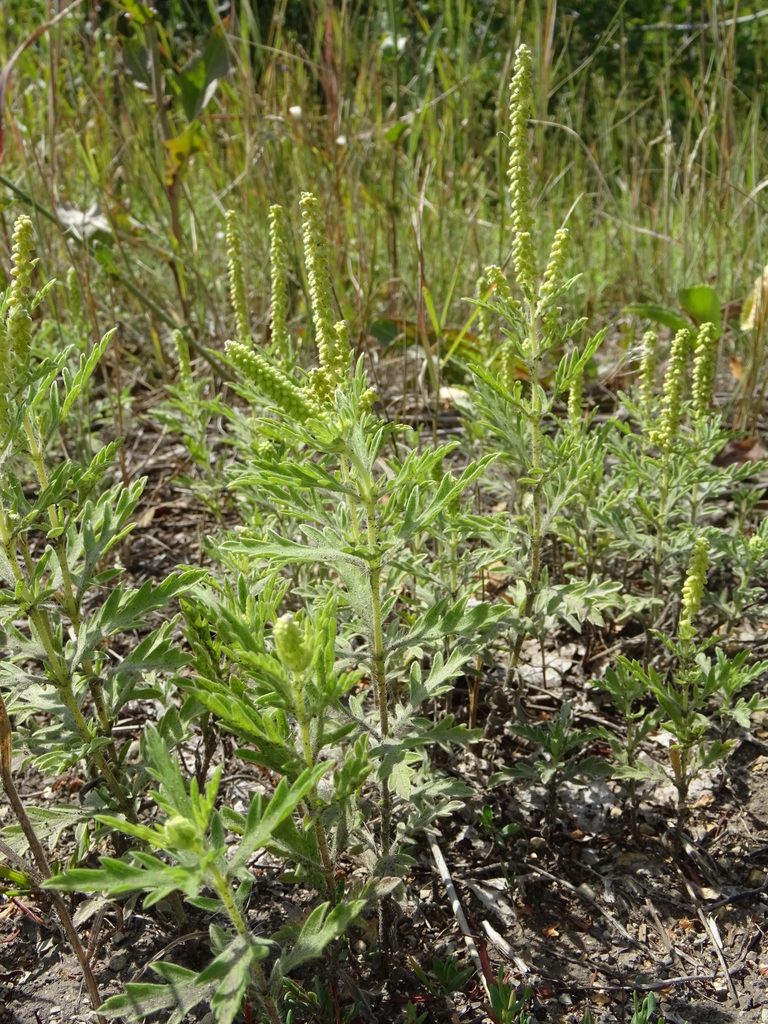
Western ragweed
Ambrosia psilostachya
perennial herbView on Calscape
Wildlife Supported
Birds

higHouse Finch
Seeds · Year-RoundImportant winter seed source in California; visits ragweed for nutrition during lean months

higSong Sparrow
Seeds · Year-RoundRegularly forages on ragweed seeds; year-round resident in California

Seeds · Winter
Irruptive winter visitor; opportunistically feeds on small seeds including ragweed

Seeds · Winter
Winter visitor; supplemental seed source during invasion years

Seeds · Year-Round
Ground forager; feeds on fallen ragweed seeds in southwestern California
Insects

Nectar · Year-Round
Adult butterfly visitor to ragweed flowers; California desert and foothill populations

Nectar · Year-Round
Migratory butterfly; multiple generations utilize ragweed nectar

modMining Bee
Pollen · Year-RoundSpring-active mining bee; provisions nests with ragweed pollen

Pollen · Year-Round
Halictid bee specialist on ragweed pollen; multiple California populations