← Back to results

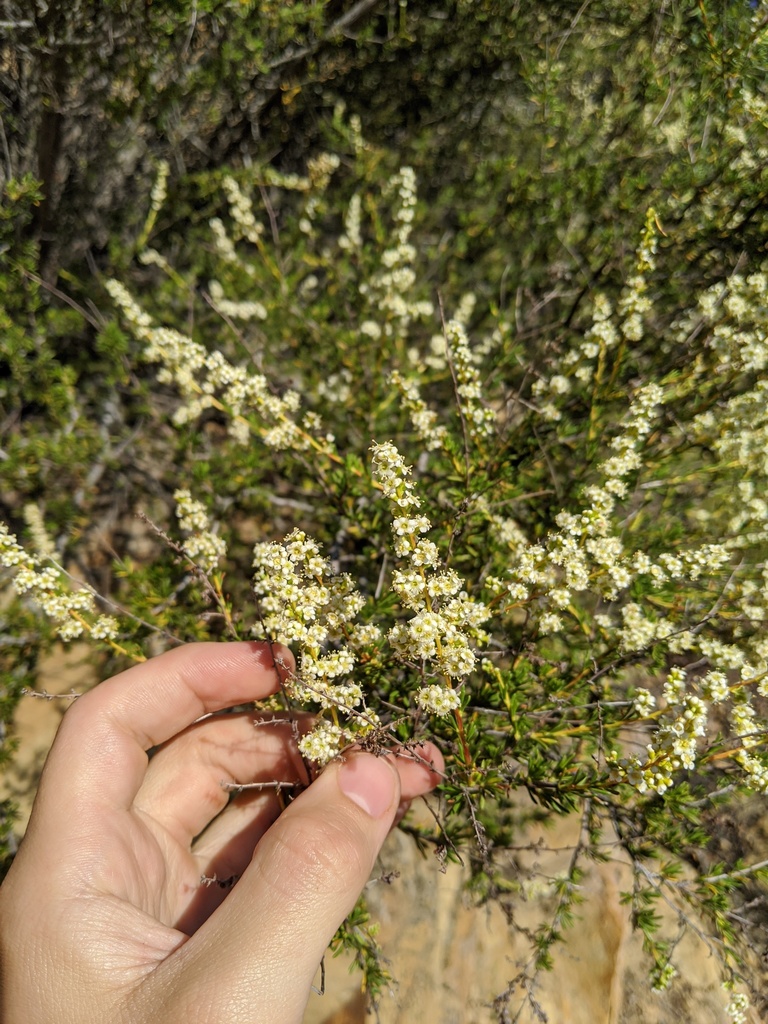
Chamise

Adenostoma fasciculatum

Care

Sun

full sun

Water

very low

Soil

Fast, Medium, Slow; Tolerant of sand and clay.

Size

3–13ft tall , 1–8ft wide

Bloom

Mar-Aug

Foliage

Evergreen

Deer

Resistant

Native Range

Chaparral throughout California ranges from Oregon border to San Diego County, 500-6000 ft elevation on dry slopes.

Care Guide

Planting

Plant chamise in full sun in a location with fast-draining soil - it tolerates sand, clay, and various soil types, so drainage matters more than soil composition. Space plants according to your desired mature size (3–13 feet), keeping in mind that chamise develops deep, wide-spreading roots excellent for slope stabilization. Plant in fall or early winter to let roots establish before the dry season.

After Planting

Water weekly during your first summer, then transition to no more than twice monthly once established - this plant is exceptionally drought-tolerant once its deep root system develops. The #1 mistake is overwatering: chamise evolved in chaparral conditions and actually becomes MORE fire-resistant with occasional watering rather than regular irrigation, so err on the side of dry. You can prune after flowering (spring through early summer) or after the first year to shape it, and the plant will resprout vigorously from its basal burl if cut back hard.

Visit Calscape for more information about Chamise

Endangered & Threatened Species Supported

Baird's Sparrow Spizella atrogularis
CA: Threatened

California state threatened listing

Chalcedon Checkerspot Euphydryas chalcedona
CA Special Concern

California Species of Special Concern

Wildlife Supported

Insects

Larval Host · Year-Round

Larvae feed on chamise foliage April-June; primary host plant

Larval Host · Year-Round

Larvae overwinter feeding on chamise foliage; emerge spring

Larval Host · Spring

Early spring larvae feed on new growth; critical for early season emergence

Larval Host · Year-Round

Caterpillars feed on chamise leaves; adults emerge mid-summer

hig Honey bee
Pollen · Year-Round

Important nectar and pollen source; evergreen flowering throughout year

Larval Host · Year-Round

Fungal gall host; supports gall midges and parasitoid ecology

Pollen · Spring

Specialist bee collecting pollen for larval provisions spring season

Larval Host · Spring

Larvae feed on young foliage March-May; form silken tents

Birds

Shelter · Year-Round

Dense foliage provides nesting and roosting sites year-round; critical winter shelter

Seeds · Year-Round

Primary seed source, particularly important in late summer-fall when seeds mature

Shelter · Winter

Uses dense chamise for winter cover and foraging in chaparral habitat

Mammals

Seeds · Year-Round

Harvests and caches seeds; critical food source September-March

Where to Buy

East Bay Wilds

2110 Eighth St, Suite 202, Berkeley

Fri 9:30am-4pm (occasional Sat, call ahead)

1.5 mi (510) 409-5858 Website
Native Here Nursery

101 Golf Course Dr, Tilden Regional Park, Berkeley

Sat 10am-2pm

3.0 mi (510) 549-0211 Website
Watershed Nursery

601A Canal Blvd, Richmond

Tue-Sun 10am-4pm

5.0 mi (510) 234-2222 Website