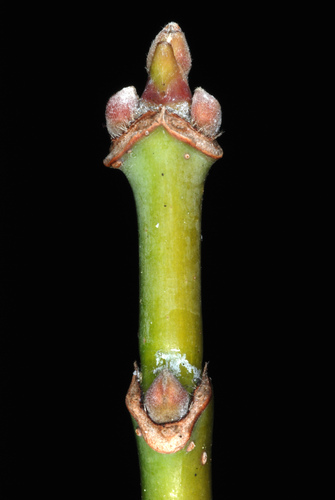
Box-elder
Acer negundo
Care
part shade, full sun
moderate
Medium, Slow; Tolerates a variety of soils as long as adequate moisture is present.
35–66ft tall , 40–40ft wide
Jan-Dec
Deciduous
Resistant
Supports up to 120 butterfly and moth species in Mediterranean California
Riparian corridors throughout California except deserts, below 6000 ft elevation along streams and wetlands, extending to British Columbia and east to the Great Plains.
Care Guide
Planting
Plant your box elder in full sun or partial shade with plenty of space - this tree grows fast and reaches 50+ feet tall and nearly as wide at maturity, so give it room to spread. It tolerates a variety of soils but needs consistent moisture, so choose a spot that doesn't dry out completely; medium to slow-draining soil is fine as long as you can keep it adequately watered. Plant in fall or winter for best establishment.
After Planting
Water weekly during your first summer to keep the soil consistently moist; once established, you can drop back to weekly irrigation only during hot months. Watch for sucker growth at the base and along the trunk - remove these promptly to prevent them from becoming weedy and invasive. The biggest mistake people make is underestimating how large this tree gets and planting it too close to structures or other plants; give it the space it needs from day one.
Wildlife Supported
Insects

Host-specific aphid; populations peak May-Sep on leaves and twigs

Larvae develop in petiole galls; generations emerge May-Sep

Leaf mining caterpillar; larvae tunnel leaves May-Aug
Mammals

Primary seed dispersal and consumption Sep-Mar; critical mast crop resource

Heavy seed predation and caching Oct-Feb; important winter food source
Birds

Omnivorous foraging; seeds consumed when abundant Oct-Jan

Small seed extraction and consumption Dec-Mar

Irruptive winter visitor; crack hard seeds with powerful bill Dec-Feb

Opportunistic seed consumption during migration staging Sep-Nov