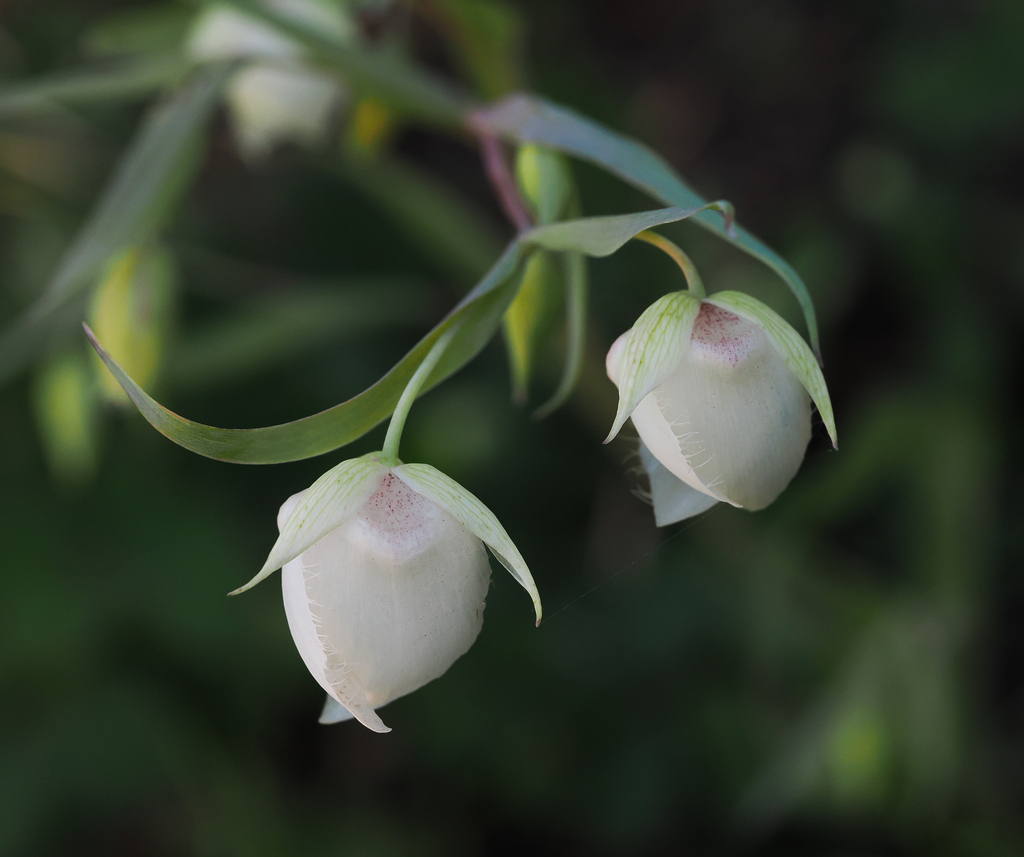
White Globe Lily
Calochortus albus
Care
part shade
very low
well-drained; woodland soils; summer dry
1–2ft tall , 0–0ft wide
Apr-Jun · white
Deciduous
Resistant
Friendly
Prized
Bulbs roasted or boiled; traditional Indigenous food
California Coast Ranges from Shasta to San Diego
Nodding globe-shaped white to pale pink flowers
Elegant woodland bulb; needs dry summer dormancy; lantern-like flowers
Care Guide
Planting
Plant your White Globe Lily in fall or early winter in well-drained soil with good drainage - it thrives in woodland soils and tolerates even serpentine soil. Choose a spot with part shade to full sun; this Bay Area native grows in varied conditions from shady woods to open grasslands and coastal bluffs. Space plants about 6–12 inches apart since they stay compact at 1–2 feet tall, and plant the bulbs at a depth of about 3 inches.
After Planting
Water moderately during the growing season (winter through spring blooming), then stop watering completely once the plant flowers - it naturally goes dormant in summer and needs no irrigation until autumn rains return. Do not water in summer; this is critical, as the plant requires a dry dormancy period and overwatering is the most common way to kill it. You'll see the foliage die back after flowering (typically by June), which is normal. Year one just means establishing the bulb; by year two you should have reliable spring blooms without any additional care.
Wildlife Supported
Insects
Primary bloom period Apr-Jun provides early season nectar source
Spring-active solitary bees collect pollen Apr-Jun
Nodding blooms specifically adapted for bumblebee visitation during spring bloom
Beetles visit blooms for pollen feeding during Apr-Jun flowering period
Specialist beetle fauna feed on pollen during bloom season
Early spring foragers utilize bloom period for nectar
Small thrips visit flowers for pollen during spring bloom